New Here
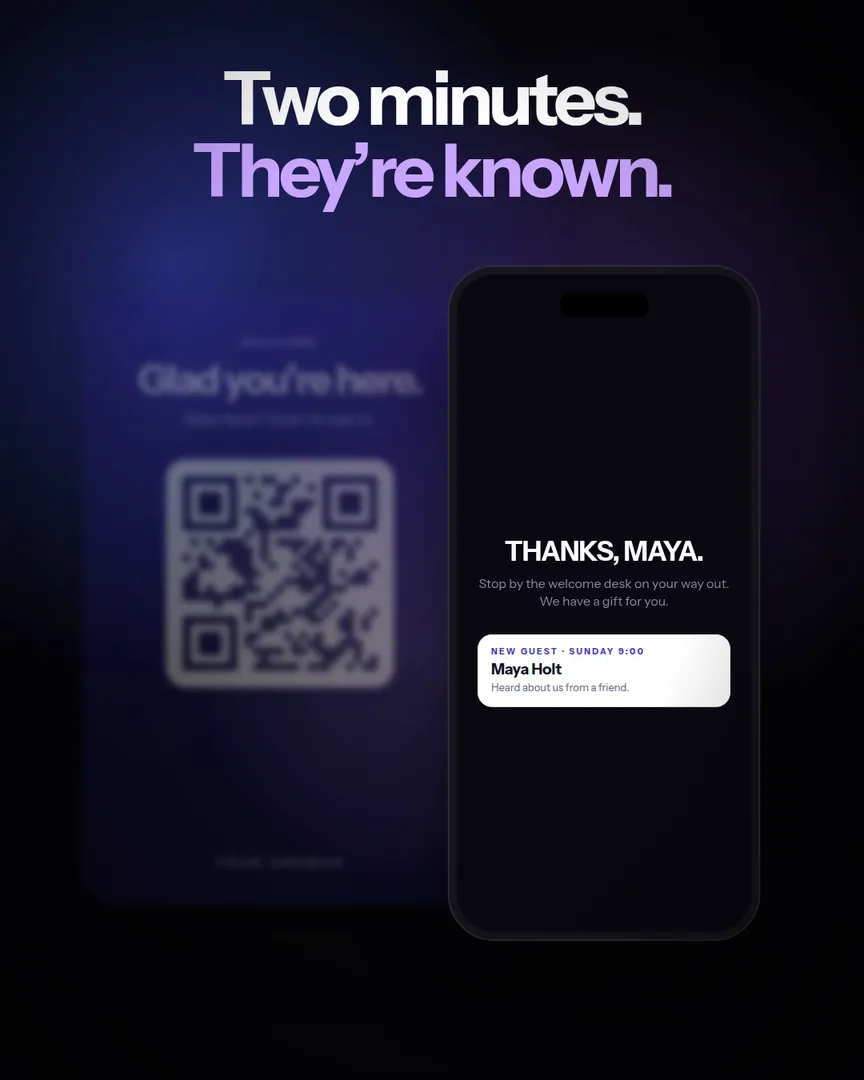
Paper cards end up in a drawer. A code on the seat in front of them opens a short welcome in your church's colors, and their name is on your New Here list before the service lets out.
The problem
Three out of four people who hand a church their information hear nothing back within thirty days Faith Perceptions, 2016. Nobody stopped caring. The card went in a drawer, the drawer went to a desk, and the person who knew what to do with it was stacking chairs.
A code does not go in a drawer. It opens your welcome on their own phone: first name, last name, mobile, and how they heard about you. Send, and they are on your New Here list with a name next to theirs.
The welcome
The welcome asks for the basics and nothing else. It takes a couple of minutes from the seat, then thanks them by name and points them to the welcome desk. The deeper questions about serving and groups come later, once they are known.
It opens with your mark and your colors, not ours. No app to download, no account, no password.
Seat back
A small card in the seat pocket or on the seat in front. Where most churches start.
Bulletin
Scans on Sunday, or on Tuesday from the kitchen counter.
Screen
A slide with the code while people find their seats.
Your tag
If your church already prints a card or tag, the code lives there.
Every plan gets the code and link. On One Room and up, we design the seat back tags to match your brand.
Yes. Some churches run both for a season. Either way, everyone ends up on the same New Here list.
No. It opens a page on their own phone. No download, no account, no login.
They land on your New Here list with the time they scanned, and someone on your team owns reaching out. You can see it happen in the film on the home page.
The home page plays it on a phone, exactly as your guests would see it.